
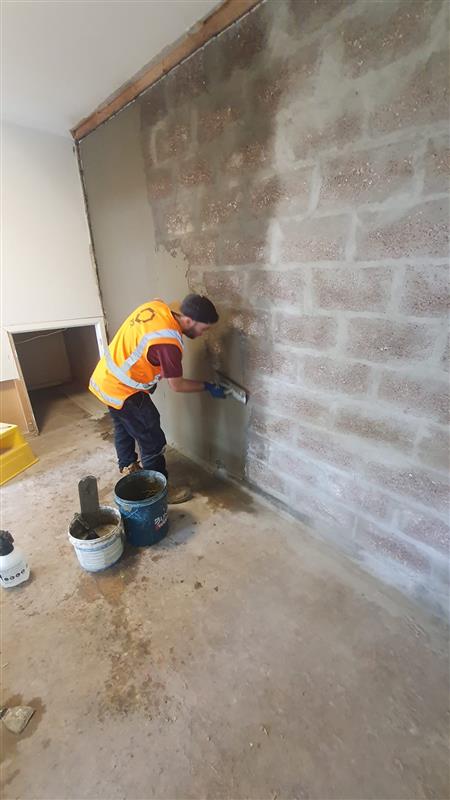
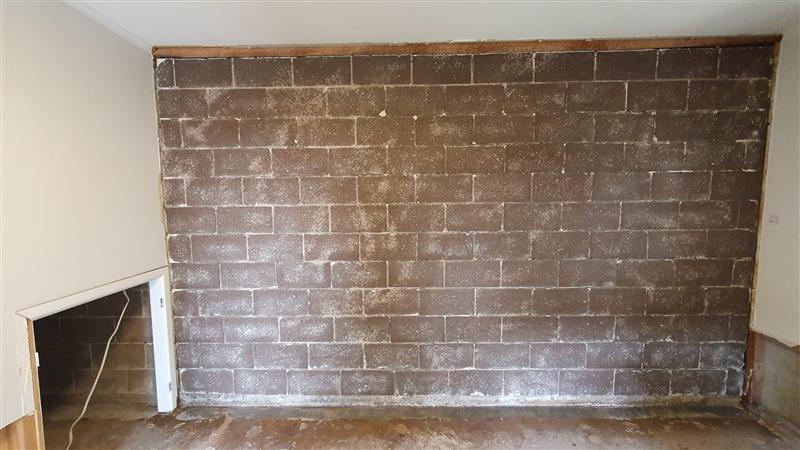
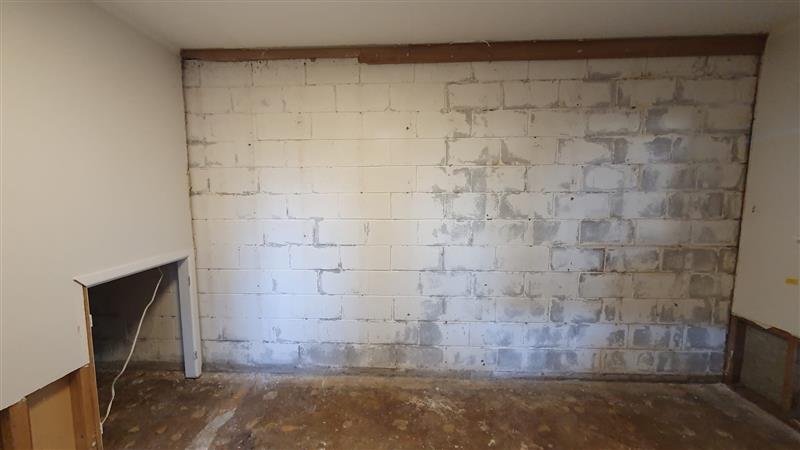
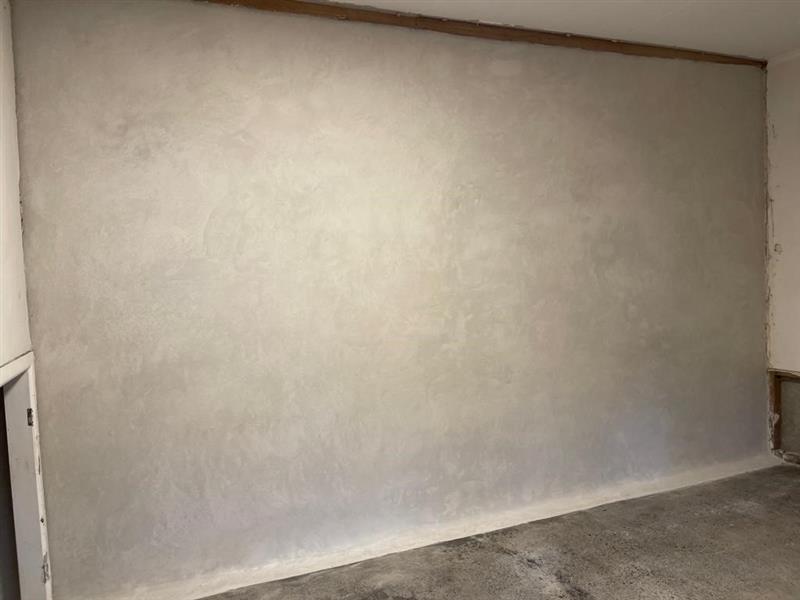
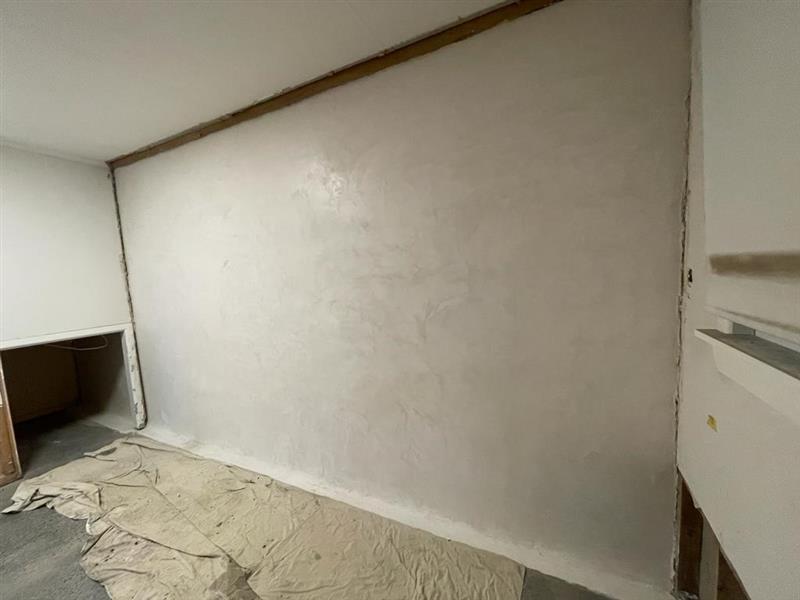
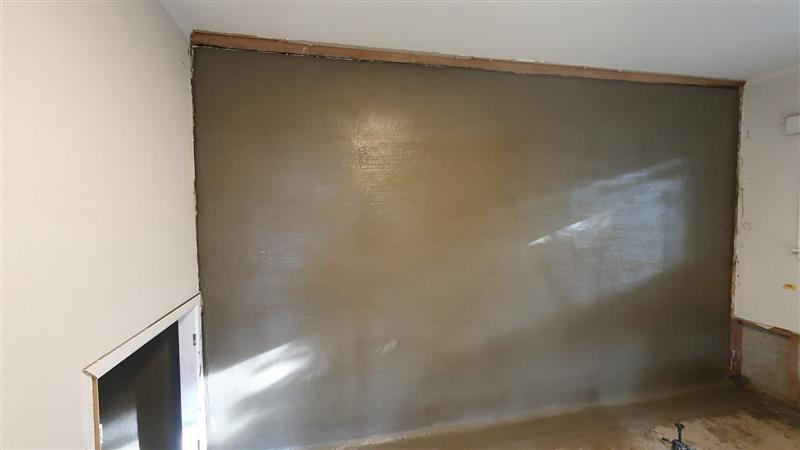


We have a full system that includes a mineral concrete slurry that is installed in the interior walls, a plastering system that goes over the cementitious slurry and a painting system to turn your basements into a living space.
We have a full system that includes a mineral concrete slurry that is installed in the interior walls, a plastering system that goes over the cementitious slurry and a painting system to turn your basements into a living space.
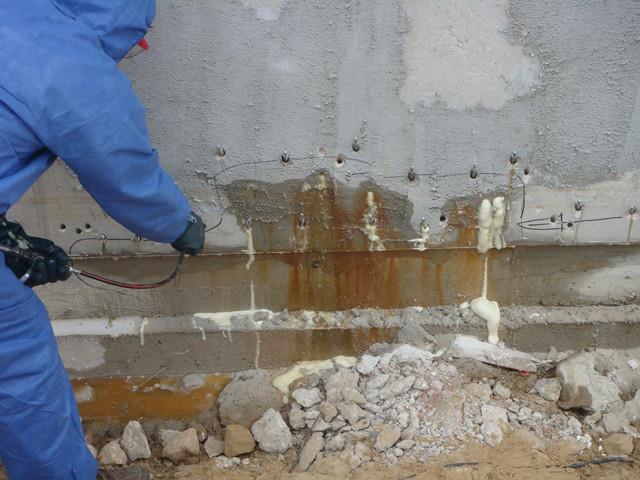
The polyurethane injection process typically begins with a thorough cleaning of the damaged area. This is followed by the installation of injection ports, which are small tubes or nozzles that are inserted into the crack or void. The injection ports are used to introduce the liquid polymer resin into the damaged area.
The polymer resin is then injected into the damaged area at a high pressure. The liquid resin flows into the crack or void, filling the space and creating a bond between the two sides of the crack. The polyurethane resin then cures and hardens, creating a permanent repair that is strong, durable, and resistant to moisture and chemicals.
Polyurethane injections have several benefits over other concrete repair techniques. They are fast, cost-effective, and require minimal disruption to the surrounding area. They can also be used in a wide range of temperatures and weather conditions, making them a versatile option for concrete repairs.
Additionally, polyurethane injections are highly effective in repairing cracks and voids in concrete structures. The polyurethane resin fills the damaged area completely, creating a strong and long-lasting bond between the two sides of the crack. The resin is also flexible, which allows it to move and shift with the concrete as it expands and contracts over time.
Overall, polyurethane injections are an effective and versatile option for repairing cracks and voids in concrete structures. However, it is important to work with a qualified professional to ensure that the technique is appropriate for the specific situation and that it is applied correctly.
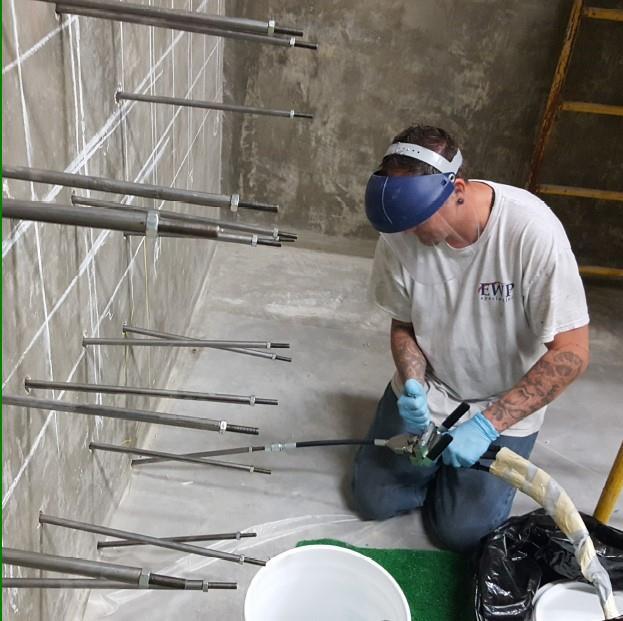
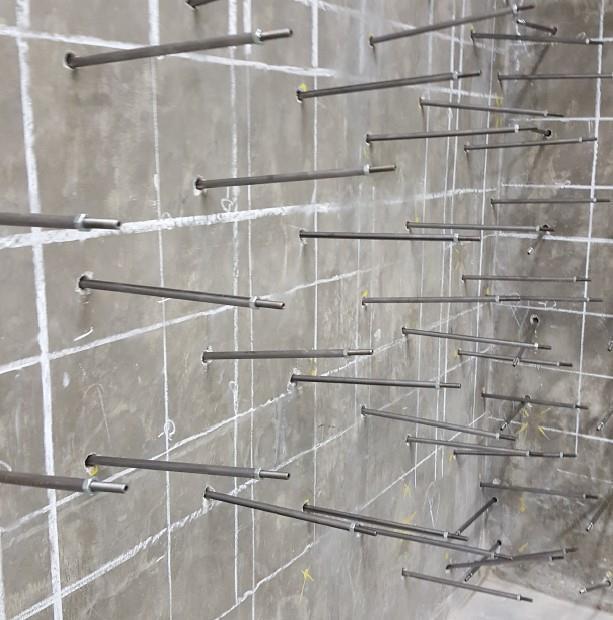
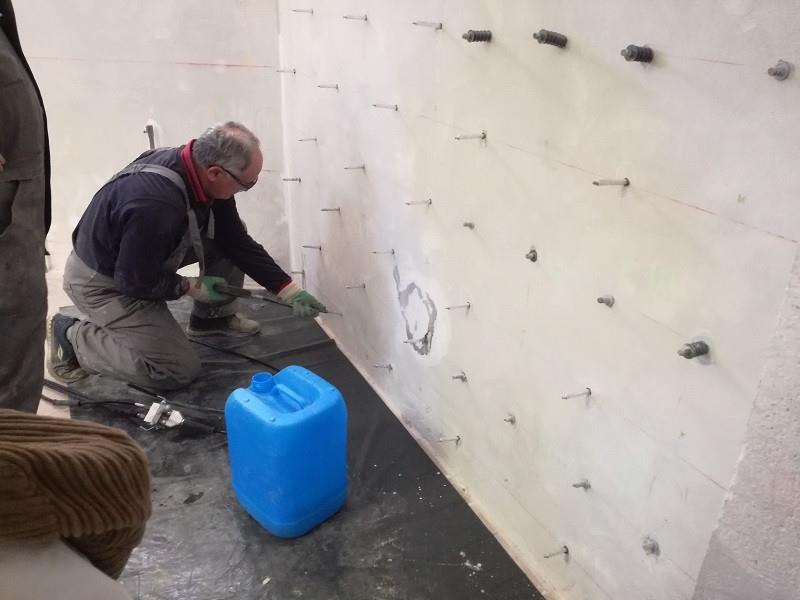
This technique is commonly used to repair both vertical and horizontal cracks in concrete structures, and it can be used in a variety of temperatures and weather conditions.
Curtain injections, on the other hand, are a type of waterproofing technique used to prevent water from seeping into a concrete structure through a crack or other void. This technique involves drilling holes into the concrete on either side of the crack and injecting a waterproofing material, such as an epoxy or polyurethane resin, into the holes. The material then flows through the crack and creates a waterproof barrier, preventing water from entering the structure.
Curtain injections are commonly used in basements, tunnels, and other underground structures where water infiltration is a concern. They can also be used in above-ground structures that are exposed to heavy rain or other sources of moisture.
Overall, acrylic injections and curtain injections are two separate techniques used for different purposes in concrete repair. While acrylic injections are used to repair cracks and create a bond between the two sides of the crack, curtain injections are used to prevent water infiltration and protect the structure from water damage.

There are many types of joint sealants available for concrete joint sealing, including silicone, polyurethane, and polysulfide sealants. These sealants are typically applied as a liquid or paste and are designed to expand and contract with changes in temperature and humidity, ensuring a long-lasting and effective seal.
The joint sealing process typically begins with cleaning the joints to remove any debris, dirt, or old sealant that may be present. The joints are then inspected for any cracks or other damage that may need to be repaired before sealing.
Once the joints are clean and prepared, the sealant is applied using a caulking gun or other application tool. The sealant is typically applied in a continuous bead along the length of the joint, filling the gap between the two concrete surfaces. The sealant is then tooled or smoothed to ensure proper adhesion and to create a smooth, even surface.
Proper joint sealing is important for maintaining the structural integrity of concrete surfaces, preventing water damage, and ensuring a safe and clean environment. It is recommended to have joint sealing performed by a professional to ensure that the correct type of sealant is used and that the joint is properly prepared and sealed for long-lasting protection.

©PCR 2020 All rights reserved.
Auckland - 22/114 Wiri Station Road, Wiri, Auckland, 2104.
Wellington - 77/41 Bouverie Street, Petone. Lower Hutt, 5012.
SEO Services Provided By KWD - An SEO Auckland NZ Company
Design by: Amaze Studio